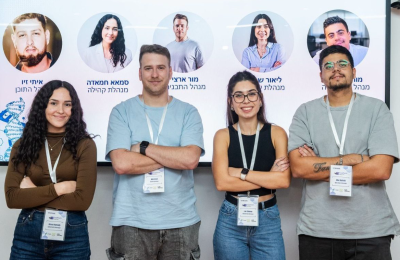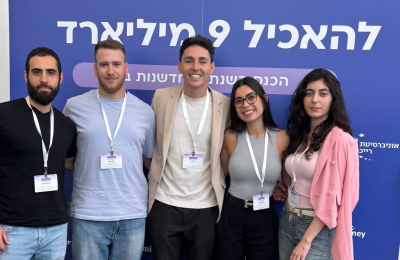



An exceptional achievement for the college’s students: a team from the Department of Biotechnology Engineering won a gold medal and first place in the sustainability category at iGEM (International Genetically Engineered Machine) — the world’s most prestigious international competition in synthetic biology, held annually in Boston with hundreds of teams from leading universities.
The team, made up of six second- and third-year students, spent the past year developing an engineered bacterial system capable of detecting industrial contaminants in water sources and emitting a luminescent signal within minutes — a cheap, fast and portable alternative to expensive laboratory testing. The project was developed in the department’s genetic engineering lab under the guidance of Prof. Michal Barnea, head of the department.
Artificial Intelligence and All the Rest
The idea grew out of a real challenge: monitoring water quality in the streams of the Galilee. The students designed a synthetic genetic pathway implanted in harmless E. coli bacteria, so that the presence of certain heavy metals activates a gene encoding a fluorescent protein. The higher the concentration of the contaminant, the stronger the glow — allowing a simple quantitative measurement.
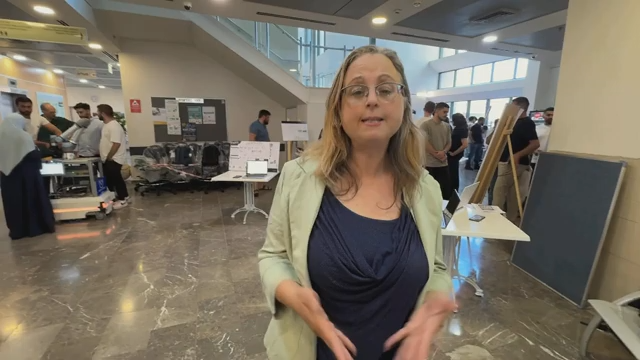
The road to the competition was not an easy one. For some eight months the students combined lab work with their regular studies, raised funding from industry partners, and collaborated with local residents to understand the needs on the ground. Their scientific training came from the department’s laboratories, alongside close mentoring from faculty members and doctoral students.
Following the win, the department is now examining how to develop the technology into a commercial prototype, together with partners in the environmental and water industries. Two team members have already begun their final projects as a continuation of the idea, and there are plans to assemble a new team to represent the college in next year’s competition as well.
“This success belongs to the students — to their curiosity, their persistence and their teamwork,” said Prof. Barnea. “We are proud of them, and confident that this is only the beginning. The Galilee has put itself on the world map of synthetic biology.”